

When I first learned to shape rolls on a rainy Sunday in Bologna, I felt like I had stumbled into a small, delicious ritual. Easy Homemade Dinner Rolls smelled of warm butter and yeast before I even touched the dough, and I remember pressing my nonna’s palm over the bowl as she taught me to fold and coax the dough into soft rounds.
I still make them when guests arrive suddenly, because they rise like a promise and bring the room together. If you want something simple to soothe and impress, try these rolls — and if you adore homebaked sweets, you might like my Easy Vegan Cinnamon Rolls for dessert.
Flavor and Popularity
The Unique Flavor Profile of Easy Homemade Dinner Rolls
These rolls taste buttery, slightly sweet, and faintly nutty from slow fermentation; moreover, they carry a delicate umami when you brush them with browned butter or garlic-herb butter before serving. Because the crumb stays tender and elastic, each bite melts with a soft chew, and the golden crust adds a hint of crispness. Furthermore, feel free to add a sprinkle of flaky sea salt or chopped herbs like rosemary for an earthy lift. Many home cooks praise these rolls because they pair comfortably with everything from soups to roasted vegetables.
Why This Recipe Is a Family Favorite and Crowd-Pleaser
Families love these rolls for their forgiving nature. They come together with minimal fuss, yet they reward the baker with a bakery-style result. Also, they work on busy weeknights and for holiday feasts, so you keep them in rotation. Children reach for them first, and I have seen friends close their eyes mid-bite, the way one does when something tastes like home. Because they complement both rich ragù and lighter salads, the rolls earn a permanent place on menus that aim to comfort.
Ingredients and Preparation
Essential Ingredients and Possible Substitutions
You need only a handful of pantry staples to make these Easy Homemade Dinner Rolls:
- All-purpose flour (or bread flour for stronger structure)
- Active dry yeast or instant yeast
- Warm milk (or non-dairy milk for a dairy-free option)
- Unsalted butter (or olive oil)
- Granulated sugar and fine salt
- One egg for richness and color (optional for a vegan swap)
If you use instant yeast, you can skip the proofing step; however, active dry yeast will reward you with a richer flavor when you bloom it in warm milk. For richer rolls, replace half the milk with cream; additionally, swap butter for olive oil to keep a softer crumb and add an herbaceous note. Moreover, you can incorporate whole wheat flour (up to 25%) for a nuttier taste, although you should then add a little extra liquid because whole grains absorb more moisture.
Step-by-Step Recipe Instructions with Tips
Prepare the dough:
- Warm 240 ml (1 cup) of milk until it feels comfortably warm; then dissolve 2 teaspoons of sugar and sprinkle 2¼ teaspoons (one packet) active dry yeast over the surface. Wait 5–10 minutes until it foams, which proves the yeast is alive.
- In a large bowl, whisk 3½ cups all-purpose flour with 1½ teaspoons salt. Add the yeast mixture, 3 tablespoons softened butter, and one beaten egg. Mix until a shaggy dough forms.
- Turn the dough onto a lightly floured surface; then knead vigorously for about 8–10 minutes until the dough becomes smooth and elastic. If you use a stand mixer, knead for 6–7 minutes on low speed with the dough hook.
- Place the dough in a lightly oiled bowl, cover it with a damp towel, and let it rise in a warm spot until doubled, about 60–90 minutes depending on your kitchen.
Shape and second rise: - Punch down the dough gently to release air. Divide into 12-16 equal pieces, depending on your preferred size. Next, roll each piece into a tight ball by tucking edges underneath and spinning it on the counter to create surface tension.
- Place the rolls in a buttered baking dish or on a parchment-lined sheet, leaving small gaps for expansion. Cover and let proof another 30–45 minutes, until puffy and jiggly.
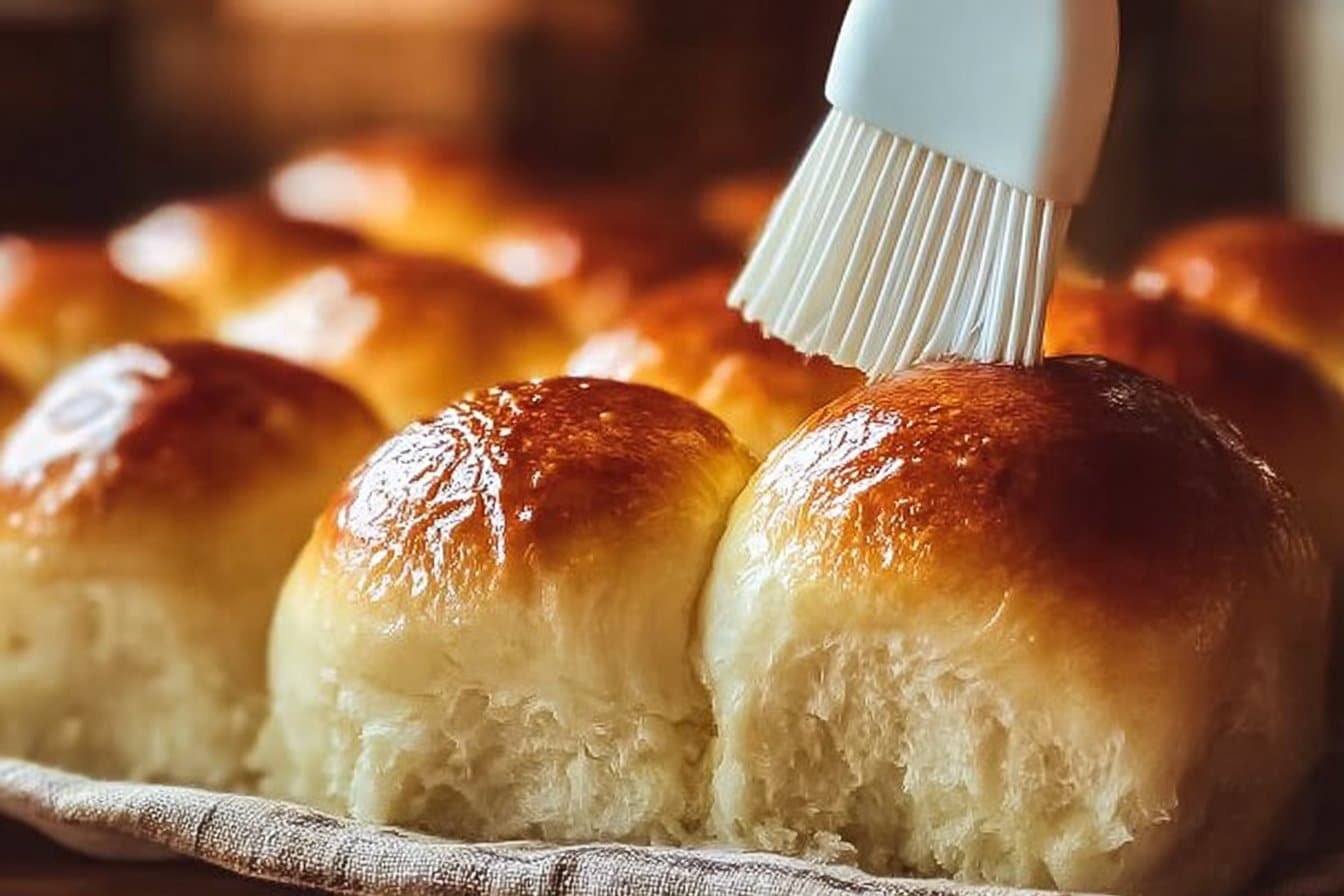
Bake and finish: - Preheat the oven to 375°F (190°C). Brush the tops with melted butter or an egg wash for color. Bake for 18–22 minutes until the tops turn golden brown and the internal temperature reaches about 190°F (88°C).
- Remove from the oven and brush again with more butter, perhaps mixed with minced garlic and chopped herbs if you want savory rolls. Allow them to rest 5–10 minutes before serving so the crumb sets.
Baking tips:
- For a softer crust, cover the rolls loosely with foil for the first 12 minutes. Then remove the foil to let the tops finish browning.
- If your dough feels too sticky, add flour one tablespoon at a time; similarly, add a teaspoon of water if it feels too dry.
- To create a richer, caramelized top, brush with browned butter after baking.
Cooking Techniques and Tips
How to Cook Easy Homemade Dinner Rolls Perfectly
First, control your temperatures. Yeast thrives between 95–110°F (35–43°C); therefore, warm milk within this range encourages a steady rise, and avoids killing the yeast. Second, knead with intention: you want a smooth, slightly tacky dough that springs back when pressed. Moreover, if you let the dough proof too long, it can overproof and collapse, so keep an eye on the rise rather than strictly on the clock.
Next, use steam for a better crust. Place a small oven-safe pan with hot water on the rack below your rolls during the first 10 minutes of baking; additionally, spritz the oven with water before closing the door. This technique yields a glossy, thin crust while keeping the interior tender. Finally, finish with flavored butter: I often sauté minced garlic and finely chopped thyme in melted butter; then I brush it over hot rolls to add an aromatic, savory layer that many guests adore.
Common Mistakes to Avoid
- Using water too hot or too cold for proofing: too hot kills yeast, and too cold slows fermentation.
- Overflouring the dough: add flour sparingly to avoid dry, dense rolls.
- Skipping the second rise: the second proof creates oven spring and a lighter crumb.
- Baking straight from the fridge: if you chill your dough, allow it to warm slightly to room temperature for a better rise.
- Crowding the pan: give rolls room to expand, unless you desire pull-apart rolls, in which case place them closer and brush generously with butter so they remain moist.
Health Benefits and Serving Suggestions
Nutritional Value of Easy Homemade Dinner Rolls
A standard dinner roll made from enriched flour provides a comforting source of energy, and it supplies carbohydrates to fuel the body. When you choose milk over water and include an egg, you add protein and small amounts of calcium and vitamin D. To increase fiber and micronutrient content, substitute part of the all-purpose flour with whole wheat or oat flour; moreover, you can fold in seeds like flax or chia for omega-3s and extra nutrients. Of course, rolls pair with protein-rich mains to balance a meal, so think of them as a vehicle for nutrition as well as pleasure.
Best Ways to Serve and Pair This Dish
Serve these rolls warm and brushed with herb-butter alongside roasted chicken, a creamy mushroom ragù, or a simple green salad. They complement both hearty winter stews and bright summer soups, so keep them on your table year-round. For a complete, rustic feast, place the rolls beside slow-cooked meatballs or spiced braises; in fact, I often set them out with a plate of meat and tzatziki, inspired by recipes like Easy Greek Meatballs with Homemade Tzatziki Sauce, because the soft bread soaks up juices beautifully. Also, transform leftovers into sandwiches, or toast them lightly with olive oil and garlic for a quick bruschetta-style snack.
FAQ Section
What type of mushrooms are best for Easy Homemade Dinner Rolls?
While mushrooms do not traditionally belong inside plain dinner rolls, you can easily make savory mushroom rolls by sautéing chopped cremini or shiitake mushrooms with garlic and thyme until they turn golden and release their earthy juices. These varieties carry more umami and texture, and they hold up well when folded into a soft roll filling. For a milder taste, choose white button mushrooms, but remember to cook out excess moisture before assembling so the rolls remain tender, not soggy.
Can I use dried garlic instead of fresh?
Yes, you can substitute dried garlic powder or granulated garlic when you lack fresh cloves. Use roughly one-third the amount compared to fresh minced garlic, and add it to melted butter or the dough during mixing so it rehydrates and distributes evenly. However, fresh garlic gives a brighter, punchier flavor when you brush it on after baking, so use fresh when possible for the best aromatic finish.
How do I store leftover Easy Homemade Dinner Rolls?
Store cooled rolls in an airtight container or tightly wrapped in plastic at room temperature for up to two days. If your kitchen runs warm, refrigerate them in an airtight bag to maintain freshness; however, refrigeration can dry them slightly, so briefly rewarm in the oven or microwave with a damp paper towel before serving to restore softness.
Can I freeze Easy Homemade Dinner Rolls?
Absolutely. Freeze fully cooled rolls in a single layer on a baking sheet for a couple of hours to flash-freeze them; then transfer to a freezer bag and keep up to three months. Thaw overnight in the refrigerator or warm gently in the oven from frozen at 325°F (160°C) for 8–12 minutes until heated through. Also, you may freeze unbaked shaped rolls on a tray, then proof and bake from frozen, adding a few extra minutes to baking time for the best fresh-baked result.
CONCLUSION
If you’re like me, you keep a recipe in your head that feels like a warm doorway into someone’s kitchen. There’s something comforting about making a simple dough, watching it rise, and sharing the golden result with people you love. Trust me, you’ll want to make this again and again; moreover, each batch will teach you something small and beautiful about patience, flavor, and the way food brings us close. Go on—let the house smell like butter and yeast tonight, and notice how quickly a small roll becomes the heart of a meal.
Print
Easy Homemade Dinner Rolls
- Total Time: 90 minutes
- Yield: 12 servings 1x
- Diet: Vegetarian
Description
These fluffy dinner rolls, infused with warmth and buttery flavor, are perfect for any occasion, bringing comfort and delight to your table.
Ingredients
- 3½ cups all-purpose flour (or bread flour)
- 2¼ teaspoons active dry yeast (or instant yeast)
- 240 ml (1 cup) warm milk (or non-dairy milk)
- 3 tablespoons unsalted butter (or olive oil)
- 2 teaspoons granulated sugar
- 1½ teaspoons fine salt
- 1 egg (optional for vegan swap)
Instructions
- Warm milk until comfortably warm, then dissolve sugar and sprinkle yeast on top. Wait 5-10 minutes until foamy.
- In a large bowl, whisk flour and salt. Add the yeast mixture, softened butter, and beaten egg. Mix until a shaggy dough forms.
- Knead on a floured surface for 8-10 minutes until smooth and elastic.
- Place dough in oiled bowl, cover, and let rise until doubled, about 60-90 minutes.
- Punch down the dough, divide into 12-16 pieces, and shape into balls.
- Place rolls in a buttered dish, cover, and let proof for another 30-45 minutes.
- Preheat oven to 375°F (190°C). Brush rolls with melted butter and bake for 18-22 minutes until golden brown.
- Remove from oven, brush again with butter, and let rest for 5-10 minutes before serving.
Notes
For a softer crust, cover rolls with foil for the first 12 minutes of baking. Adjust liquid based on dough consistency.
- Prep Time: 15 minutes
- Cook Time: 22 minutes
- Category: Bread
- Method: Baking
- Cuisine: Italian
Nutrition
- Serving Size: 1 roll
- Calories: 150
- Sugar: 2g
- Sodium: 200mg
- Fat: 5g
- Saturated Fat: 3g
- Unsaturated Fat: 2g
- Trans Fat: 0g
- Carbohydrates: 22g
- Fiber: 1g
- Protein: 4g
- Cholesterol: 20mg
Keywords: dinner rolls, homemade bread, baking, comfort food, vegetarian