

I remember the first time I tasted Classic Danish Butter Cookies; I had just come in from a chilly market morning, and the scent of warm butter and vanilla wrapped around me like a soft scarf. Classic Danish Butter Cookies lived on my nonna’s small silver tray, and right away I understood why people kept them in tins — they felt like a memory you could eat. At that moment, I promised myself I would learn every little trick that makes them crumbly at the edges, yet meltingly buttery at the center.
Flavor and Popularity
The Unique Flavor Profile of Classic Danish Butter Cookies
Classic Danish Butter Cookies deliver a simple but profound taste: buttery, sweet, and gently nutty. Moreover, they highlight the pure flavor of butter without heavy spices, so each bite sings with clarity. Additionally, skilled bakers often use a touch of vanilla and a hint of salt to balance the sweetness, and sometimes almond extract to add an earthy, nutty undertone. Because these cookies contain few ingredients, each one matters; therefore, use the freshest butter and pure vanilla to get the authentic, melt-in-your-mouth quality.
Also, unlike some rich, cakey cookies, Danish butter cookies keep a crisp snap on the outside while the inside remains tender. Consequently, they become perfect with coffee or tea, and many households choose to offer them as a simple side treat when visiting guests arrive. For a similar buttery sensation, you might enjoy a modern twist like these buttered popcorn sugar cookies, which echo that same sweet, buttery profile but with playful texture and flavor.
Why This Recipe Is a Family Favorite and Crowd-Pleaser
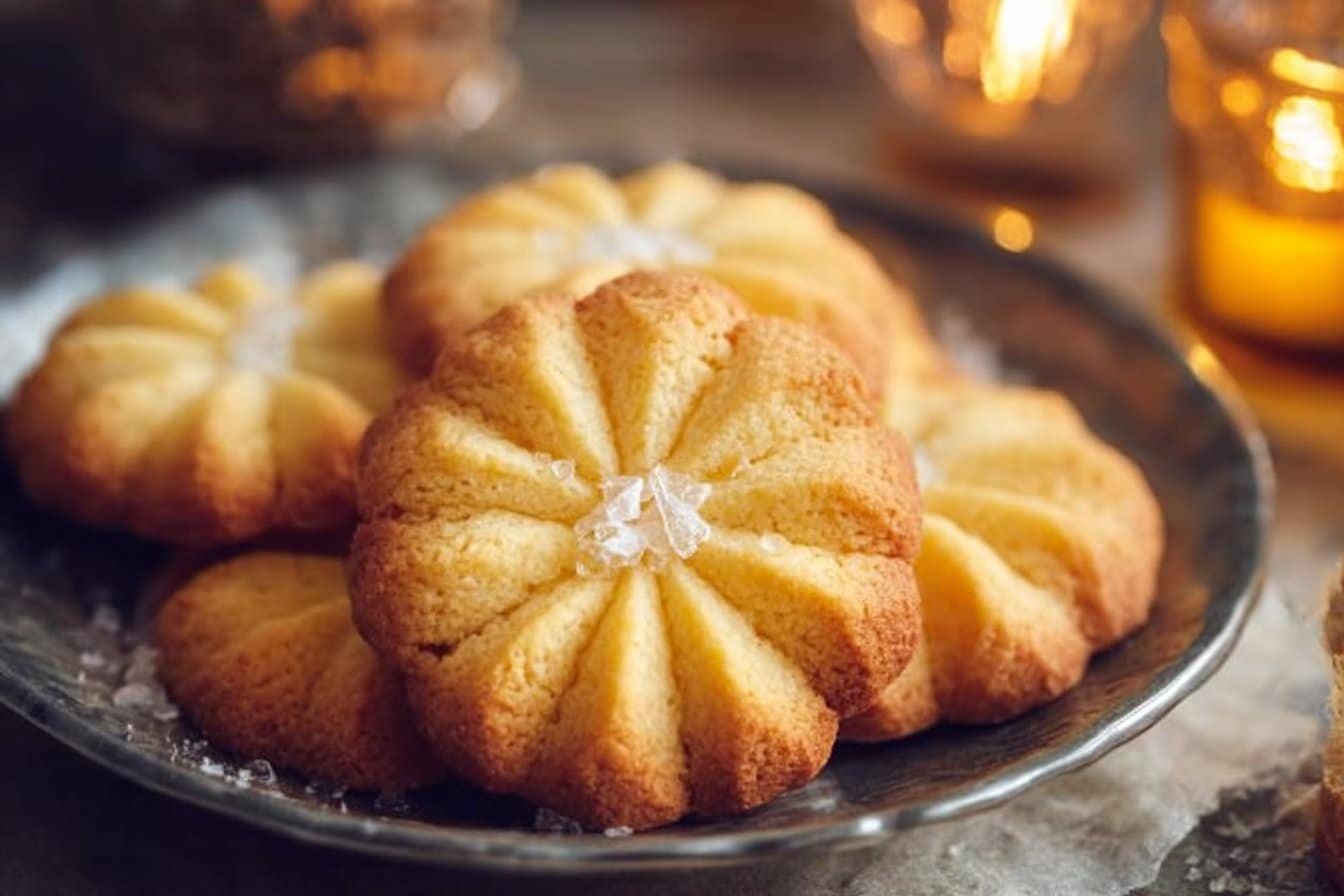
People adore Classic Danish Butter Cookies because they taste like comfort. Furthermore, they require basic pantry ingredients, so you can make them on short notice. Families keep this recipe for traditions — holidays, tea times, and housewarmings — because they travel well and look beautiful when piped into shapes. Also, children love helping to press the dough or cut shapes, which means the cookies gather warmth from hands and laughter as well as the oven. Thus, these cookies feel celebratory even when you make them on a quiet weekday.
Ingredients and Preparation
Essential Ingredients and Possible Substitutions
You need only a handful of quality ingredients to make Classic Danish Butter Cookies. First, unsalted butter gives them their signature richness, so choose real, high-fat butter for the best texture. Next, fine sugar or caster sugar dissolves quickly and keeps the crumb delicate. Also, all-purpose flour forms the structure, while egg yolks enrich the dough and help it bind. Finally, a pinch of sea salt and pure vanilla extract lift the flavors harmoniously. For a gentle almond note, add a little almond extract.
If you must substitute, then consider these options: use European-style butter for extra butterfat, or use superfine sugar if you like a silkier dough. However, avoid margarine or low-fat spreads; they reduce the cookie’s tenderness and flavor. Also, if you require gluten-free baking, blend a 1:1 gluten-free flour that includes xanthan gum and chill the dough slightly longer to help it hold shape.
Step-by-Step Recipe Instructions with Tips
First, gather your ingredients and let the butter soften at room temperature for about 30–45 minutes. Next, follow these steps:
- Cream the butter and sugar together in a bowl until pale and airy; then add the egg yolks one at a time, scraping down the sides as needed.
- Add vanilla (and almond extract if using), and mix just until combined. After that, fold in the flour gently with a spatula or paddle attachment until the dough holds together.
- If you plan to pipe shapes, transfer the dough to a piping bag fitted with a star tip; otherwise, chill the dough for 20–30 minutes to make it easier to roll and cut.
- Preheat the oven to 350°F (175°C). Line baking sheets with parchment paper.
- Pipe or shape the cookies onto the sheets, spacing them at least an inch apart. Then, chill the trays for a few minutes to help them keep their edges.
- Bake for 10–12 minutes, or until the edges show a gentle golden hue. Meanwhile, rotate the trays halfway through for even baking.
- Finally, cool the cookies on a wire rack to let them crisp up slightly before serving.
Tip: also press a single almond into the center of each piped cookie for a traditional look. Additionally, you can sprinkle a few flakes of sea salt on top right after the cookies leave the oven to highlight the buttery flavor.
Cooking Techniques and Tips
How to Cook Classic Danish Butter Cookies Perfectly
To cook these cookies perfectly, focus on temperature control and dough handling. First, keep your butter soft but not melted; cool butter yields crumbly cookies, while melted butter produces a flat spread. Also, use a low to moderate oven temperature so the cookies set before they brown too quickly. Moreover, choose a heavy baking sheet and line it with parchment to encourage even browning and easy release. When you pipe, apply even pressure so the cookies take on uniform shapes, which helps them bake consistently.
Furthermore, chill the dough briefly if your kitchen feels warm. This step prevents the cookies from losing their shape in the oven. Finally, allow the cookies to cool completely; they gain structure as they cool, and you will notice their texture refine from soft to perfectly tender and crisp.
Common Mistakes to Avoid
Many bakers overwork the dough, which makes cookies tough; therefore, mix only until the flour disappears. Also, avoid high oven temperatures that brown the edges before the centers cook. Additionally, do not skip the chilling step if your dough seems soft — the oven will happily spread warm butter into flat circles. Finally, measure flour by spooning it into the cup and leveling, or better yet, weigh it; too much flour dries the dough and ruins the texture.
Health Benefits and Serving Suggestions
Nutritional Value of Classic Danish Butter Cookies
These cookies sit on the indulgent side; they provide energy from butter and sugar, plus protein from egg yolks. However, because they use simple, unprocessed ingredients, you know what you eat. Also, you can control portion size easily by making smaller piped shapes. If you want to lighten the recipe, reduce the sugar slightly and serve smaller portions alongside fresh fruit to create a balanced contrast.
Best Ways to Serve and Pair This Dish
Classic Danish Butter Cookies pair wonderfully with warm beverages. For instance, they complement a robust black coffee or a delicate jasmine tea. Moreover, you can serve them on a cheese board, where their buttery texture contrasts nicely with a tangy, soft cheese. Also, present them with lemon curd or marmalade for a bright accompaniment, or crumble them over vanilla ice cream as an impromptu crumble.
Because these cookies travel well, pack them for picnics or thoughtful gifts in tins. Meanwhile, if you want to broaden your cookie repertoire, try baking different shapes and flavors together; for example, a chocolate-dipped rim or a sprinkle of chopped herbs like rosemary for an intriguing savory note. If you enjoy experimenting, also check how butter-forward recipes handle flavors in other cookies, such as these chewy black forest cookies, where chocolate and cherries play beautifully against a buttery backdrop.
FAQ Section
What type of mushrooms are best for Classic Danish Butter Cookies?
Mushrooms don’t belong in Classic Danish Butter Cookies; therefore, you should avoid them in this delicate, buttery biscuit. If you mean to pair the cookies with a savory mushroom dish, choose a mild, earthy mushroom like cremini for a balanced contrast. However, keep sweet baking and mushrooms separated unless you plan a creative savory experiment.
Can I use dried garlic instead of fresh?
No, garlic—dried or fresh—does not belong in traditional Classic Danish Butter Cookies. These cookies celebrate butter and vanilla, so savory aromatics would clash with their sweet profile. If you seek a savory biscuit, then explore herb biscuits where dried garlic could work, but not in this classic recipe.
How do I store leftover Classic Danish Butter Cookies?
Store leftover cookies in an airtight container at room temperature. Also, separate layers with parchment paper to prevent sticking. Typically, cookies remain fresh for up to two weeks when kept cool and dry, though their texture tastes best within the first week. Additionally, avoid storing them in the fridge because humidity can soften the crisp edges.
Can I freeze Classic Danish Butter Cookies?
Yes, you can freeze these cookies. First, cool them completely, then arrange them in a single layer on a tray and flash-freeze for an hour. Next, transfer them to a freezer-safe container or bag with parchment between layers. Also, thaw at room temperature for about 20–30 minutes before serving. For unbaked dough, you can pipe onto trays, freeze until firm, and then store the frozen shapes; bake from frozen, adding a couple of minutes to the bake time.
Conclusion
If you’re like me, you understand how a simple cookie can carry the warmth of a kitchen and the memory of someone’s hands shaping dough. There’s something comforting about the straightforward honesty of Classic Danish Butter Cookies; they don’t try to be many things. Instead, they celebrate one thing deeply and well — buttery, tender simplicity. Trust me, you’ll want to make this again and again, and with each batch you’ll find new reasons to share them with friends, to tuck one into a lunch, or to keep a tin for a quiet moment with tea.
Print
Classic Danish Butter Cookies
- Total Time: 57 minutes
- Yield: 24 cookies 1x
- Diet: Vegetarian
Description
Classic Danish Butter Cookies are melt-in-your-mouth treats with a buttery, sweet, and gently nutty flavor, perfect for tea or coffee.
Ingredients
- 1 cup unsalted butter, softened
- 3/4 cup fine sugar (or caster sugar)
- 2 cups all-purpose flour
- 2 egg yolks
- 1 tsp pure vanilla extract
- 1/4 tsp almond extract (optional)
- 1/4 tsp sea salt
Instructions
- In a bowl, cream the butter and sugar until pale and airy.
- Add egg yolks one at a time, mixing well after each addition.
- Mix in vanilla and almond extract until just combined.
- Fold in the flour gently until the dough holds together.
- If piping, transfer the dough to a piping bag with a star tip, otherwise chill for 20–30 minutes.
- Preheat the oven to 350°F (175°C) and line baking sheets with parchment paper.
- Pipe or shape the cookies onto the sheets, spacing them at least 1 inch apart.
- Chill trays for a few minutes, then bake for 10–12 minutes or until edges are golden.
- Cool on a wire rack before serving.
Notes
For a traditional look, press an almond into the center of piped cookies and sprinkle sea salt on top after baking.
- Prep Time: 45 minutes
- Cook Time: 12 minutes
- Category: Dessert
- Method: Baking
- Cuisine: Danish
Nutrition
- Serving Size: 1 cookie
- Calories: 150
- Sugar: 6g
- Sodium: 60mg
- Fat: 9g
- Saturated Fat: 5g
- Unsaturated Fat: 3g
- Trans Fat: 0g
- Carbohydrates: 16g
- Fiber: 0g
- Protein: 1g
- Cholesterol: 30mg
Keywords: Danish cookies, butter cookies, holiday baking