

When I first learned to shape Homemade Soft Bavarian Pretzels, I remember the way the dough smelled — warm, slightly sweet, and promising. I rolled the ropes with hands that trembled with excitement, because Homemade Soft Bavarian Pretzels felt like a small ceremony, and I wanted to do it right. In that kitchen, sunlight pooled on the wooden table, and my nonna watched me with the same steady patience she used when she taught me tortellini; she smiled, and then she reached for the coarse salt as if to bless the dough.
Soon after, a neighbor arrived with her little son, and we all shared one before lunch. The pretzel’s chewy crust and buttery interior made everyone close their eyes; for a moment, the city noise fell away. I still think of that day whenever I warm a pretzel for guests, and often I pair these with something savory, like a skillet stew or a bright herb dip — sometimes even one of my favorite meatball recipes, which you can read about here: easy Greek meatballs with tzatziki.
Flavor and Popularity
The Unique Flavor Profile of Homemade Soft Bavarian Pretzels
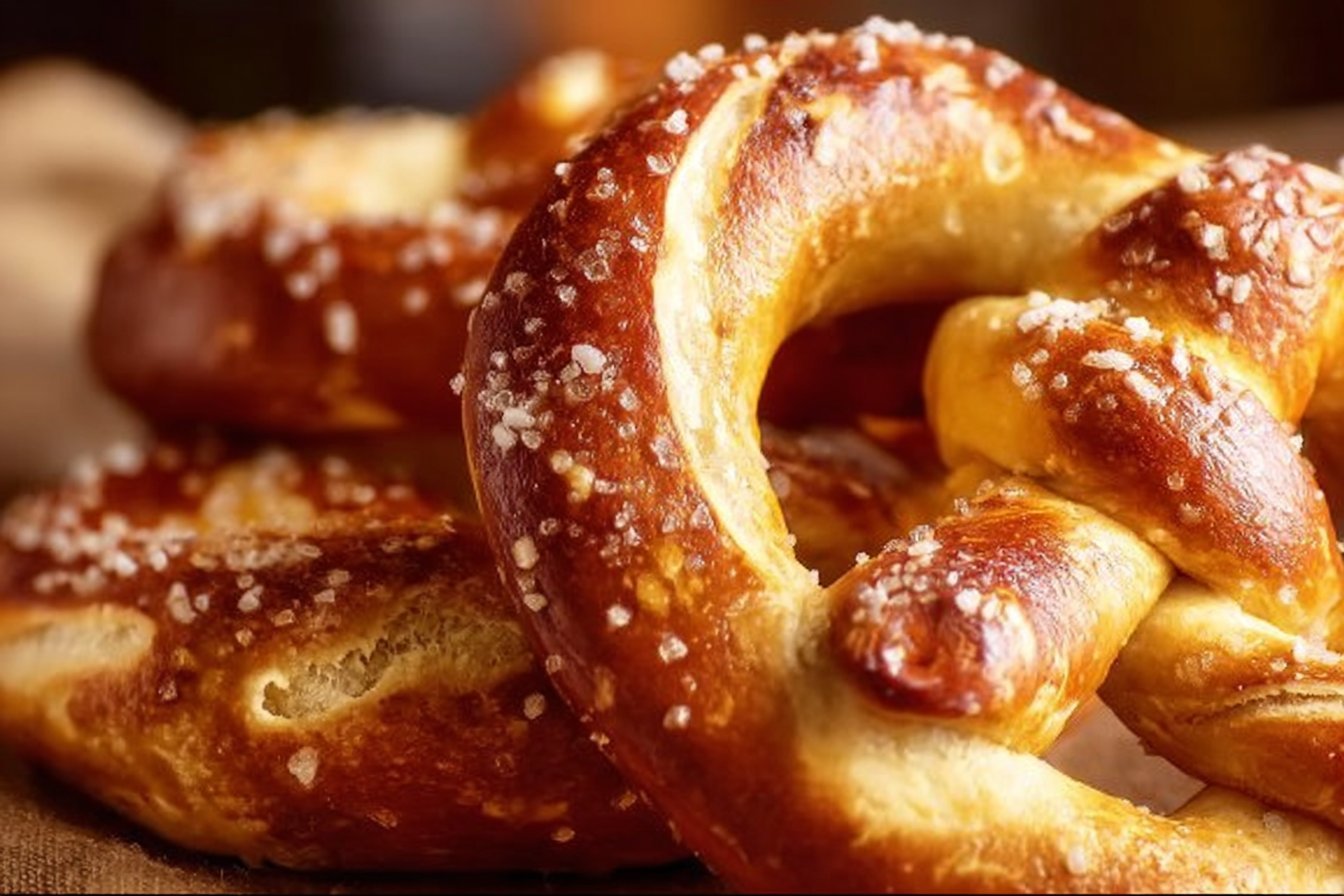
Homemade Soft Bavarian Pretzels balance a deep, malty crust with an interior that feels almost tender and buttery. Because the dough undergoes a short proof and receives a quick alkaline bath — traditionally in lye, but commonly in baking soda for home bakers — the crust develops an earthy, slightly caramelized note. Moreover, when you sprinkle coarse salt over the top, it creates bright pockets of flavor that contrast the pretzel’s mild dough. Additionally, some recipes add a touch of malt syrup or brown sugar, which introduces faint toffee-like sweetness and enhances the crust’s color.
The texture matters just as much as taste. A proper Bavarian pretzel should have a glossy, firm exterior and a soft, slightly chewy crumb inside. Therefore, technique matters: how you shape the rope, how long you rest the dough, and how you boil the pretzels will change the final bite.
Why This Recipe Is a Family Favorite and Crowd-Pleaser
This recipe charms families and crowds because it feels intimate and interactive. First, everyone likes to shape their own pretzel, so making them becomes an event rather than a task. Next, the finished pretzels travel well, so you can bring them to picnics and potlucks. Also, they pair with many flavors — mustard, melted cheese, herb butter, or even a sweet glaze — and that versatility makes them a reliable choice for mixed groups. Finally, the combination of a shiny crust and warm, tender interior appeals to both children and elders, so you often see a room grow quiet as people savor the first bite.
Ingredients and Preparation
Essential Ingredients and Possible Substitutions
- Bread flour (or strong all-purpose flour). Bread flour gives better chew, while all-purpose works in a pinch.
- Warm water (about 105–115°F). Use warm, not hot, water so yeast activates without dying.
- Active dry yeast. Instant yeast works too; simply mix differently and skip the proof step.
- Malt syrup or brown sugar. Malt adds authentic flavor; substitute light brown sugar if needed.
- Salt (table salt for dough, coarse pretzel salt for topping).
- Unsalted butter. Melted, for enriching the dough or brushing the finished pretzels.
- Baking soda. Use a concentrated baking soda bath as a safe home alternative to lye.
- Optional: egg wash (for extra shine), seeds (sesame or poppy), or herbs for topping.
If you want a dairy-free option, replace butter with neutral oil and brush a little oil on the baked pretzels for shine. If you want whole-grain flavor, substitute 20–30% of the flour with whole-wheat flour; however, knead a bit longer to develop gluten and preserve chewiness.
Step-by-Step Recipe Instructions with Tips
Dough
- Combine 1 1/2 cups warm water, 2 1/4 teaspoons active dry yeast, and 1 tablespoon malt syrup or brown sugar. Stir, then let sit until foamy, about 5–7 minutes.
- In a mixing bowl, whisk together 4 cups bread flour and 2 teaspoons fine salt. Add the yeast mixture and 2 tablespoons melted butter. Mix until a shaggy dough forms.
- Knead the dough by hand or with a stand mixer for 6–8 minutes, until smooth and elastic. Then, place dough in a lightly oiled bowl, cover, and let rise until doubled, about 1 hour.
Shaping
- Punch down the dough, then divide it into 8 equal pieces. Roll each piece into a 20–24 inch rope. For each rope, form a U, cross the ends twice, and fold them down to the base to make a classic pretzel shape.
- Place shaped pretzels on a parchment-lined baking sheet while you prepare the bath.
Alkaline Bath and Baking
- Preheat oven to 450°F (230°C). In a wide pot, bring 10 cups water to a simmer, then carefully add 2/3 cup baking soda. Boil for 2–3 minutes; the solution will foam slightly.
- Boil each pretzel for 20–30 seconds per side, using a slotted spatula. Remove and return to the baking sheet.
- Brush each pretzel with egg wash or melted butter, then sprinkle with coarse salt. Bake for 12–15 minutes, until deep golden brown. Remove, brush with a touch of butter if desired, and cool slightly before serving.
Tips
- Use a kitchen scale for consistency; dough weight matters more than cup measures. Also, keep the ropes even so baking time stays uniform.
- If the dough feels sticky, add flour sparingly. Conversely, if it feels dry, add a teaspoon of water at a time.
- For extra shine, use an egg wash; for richer flavor, brush with melted butter after baking.
- If you want seeded tops, press seeds lightly into the dough before baking so they stick.
Cooking Techniques and Tips
How to Cook Homemade Soft Bavarian Pretzels Perfectly
First, temperature control matters. Warm yeast activates best between 105–115°F, so measure the water carefully. Then, when you create the baking soda bath, let it reach a gentle boil; this step gives the pretzels their signature crust and deep color. Also, do not overcrowd the pot while boiling — give each pretzel space so the crust gelatinizes evenly.
Next, shaping takes practice, but keep going: even imperfect twists taste wonderful. Moreover, baking on a preheated baking stone or heavy sheet gives a better bottom crust. If you like a chewier crumb, bake slightly less time and rotate the pan halfway through. Finally, for a buttery finish, brush lightly with melted butter as soon as they come out of the oven.
Common Mistakes to Avoid
Many bakers overwork the dough; as a result, the pretzels become too tough. Instead, knead just until elastic. Also, avoid too little baking soda in the bath, because the crust will not develop that characteristic gloss and flavor. Conversely, do not rush the rise — if the dough does not double, the texture will be dense.
Another frequent error: salty toppings applied before the bath. Salt can dissolve in the bath and wash away; therefore, add coarse salt after the boil and just before baking. Finally, using cold water can slow yeast activity; so, warm the dough ingredients for a reliable rise.
Health Benefits and Serving Suggestions
Nutritional Value of Homemade Soft Bavarian Pretzels
Homemade Soft Bavarian Pretzels provide a satisfying source of carbohydrates and, when made with enriched or whole-grain flour, they deliver B vitamins and modest fiber. Because you control the ingredients, you can reduce sodium, choose healthier fats, or increase whole-grain content. For example, swapping half the butter for olive oil lowers saturated fat, while adding seeds creates extra protein and healthy fats.
Still, these treats remain a comfort food; therefore, enjoy them in reasonable portions. Pairing pretzels with protein-rich dips or lean proteins helps balance a meal and keeps you fuller longer.
Best Ways to Serve and Pair This Dish
Serve pretzels warm, because heat awakens aroma and the crumb feels most tender right out of the oven. For savory pairings, try a sharp mustard, beer cheese, or a herbed cream cheese. Also, the pretzel pairs beautifully with earthy flavors — sautéed mushrooms, caramelized onions, or a rosemary-garlic butter. For a playful twist, offer a sweet glaze or cinnamon-sugar butter for dipping.
For a festive spread, arrange pretzels with charcuterie elements: thinly sliced cured meats, tangy pickles, and olives. Alternatively, serve them with a rustic stew in a skillet, where the pretzel becomes a perfect side to mop up sauce. If you want a fun seasonal idea, try a decorated version inspired by celebrations; here’s a playful twist if you enjoy themed treats: festive ghost pretzels.
FAQ
What type of mushrooms are best for Homemade Soft Bavarian Pretzels?
Mushrooms do not usually go inside pretzels, but if you plan to serve a mushroom-based dip alongside them, choose cremini or shiitake for their earthy umami. Cremini offer a familiar, meaty texture, while shiitake provide a deeper, woodsy flavor. Sauté them with butter and herbs so they release their juices and develop a savory companion for the pretzel’s buttery crumb.
Can I use dried garlic instead of fresh?
Yes, you can substitute dried garlic, but adjust amounts because dried garlic concentrates flavor. Use about one-third the amount of dried garlic compared to fresh. Also, for topping, mix dried garlic into melted butter for brushing; however, fresh minced garlic sautéed briefly in butter gives a brighter, fresher aroma that many people prefer.
How do I store leftover Homemade Soft Bavarian Pretzels?
Store leftovers in a paper bag at room temperature for up to two days; this keeps the crust from becoming overly soft. If you must use plastic, wrap loosely to avoid trapping steam. To refresh, reheat in a 350°F oven for 5–7 minutes or in a skillet over low heat while turning, and brush with a little butter to restore softness.
Can I freeze Homemade Soft Bavarian Pretzels?
Yes, freeze pretzels either before baking or after cooling. For unbaked pretzels, flash-freeze on a sheet, then transfer to resealable bags; bake from frozen, adding a few minutes to the time. For baked pretzels, wrap tightly and freeze up to one month. Thaw at room temperature and reheat in a warm oven for best texture.
CONCLUSION
If you’re like me, you seek recipes that gather people and make small rituals of ordinary days. There’s something comforting about shaping dough with your hands, about the sound of boiling water, and about that first bite when the crust cracks and the interior gives way. Trust me, you’ll want to make this again and again. Try these Homemade Soft Bavarian Pretzels the next time you invite friends over, and listen for the quiet that falls when everyone takes that first, satisfied bite.
Print
Homemade Soft Bavarian Pretzels
- Total Time: 45 minutes
- Yield: 8 servings 1x
- Diet: Vegetarian
Description
Deliciously chewy and golden-brown, these homemade soft Bavarian pretzels are perfect for sharing and pair beautifully with savory dips.
Ingredients
- 1 1/2 cups warm water (105–115°F)
- 2 1/4 teaspoons active dry yeast
- 1 tablespoon malt syrup or brown sugar
- 4 cups bread flour
- 2 teaspoons fine salt
- 2 tablespoons unsalted butter, melted
- 10 cups water (for boiling)
- 2/3 cup baking soda
- Coarse salt (for topping)
- Optional: egg wash, seeds (sesame or poppy), or herbs for topping
Instructions
- Combine warm water, yeast, and malt syrup or brown sugar. Stir and let sit until foamy (about 5–7 minutes).
- In a mixing bowl, whisk together the flour and salt. Add the yeast mixture and melted butter. Mix until a shaggy dough forms.
- Knead the dough for 6–8 minutes until smooth and elastic. Place in an oiled bowl, cover, and let rise until doubled (about 1 hour).
- Punch down the dough, divide into 8 pieces, and roll each into a 20–24 inch rope. Shape each rope into a pretzel.
- Preheat oven to 450°F (230°C). In a pot, bring water to a simmer, then add baking soda. Boil each pretzel for 20–30 seconds per side. Remove and place on a baking sheet.
- Brush with egg wash or melted butter, sprinkle with coarse salt, and bake for 12–15 minutes until golden brown. Cool slightly before serving.
Notes
Use a kitchen scale for accurate measurements. Brush with melted butter after baking for extra flavor.
- Prep Time: 15 minutes
- Cook Time: 30 minutes
- Category: Snack
- Method: Baking
- Cuisine: German
Nutrition
- Serving Size: 1 pretzel
- Calories: 300
- Sugar: 1g
- Sodium: 500mg
- Fat: 8g
- Saturated Fat: 4g
- Unsaturated Fat: 4g
- Trans Fat: 0g
- Carbohydrates: 48g
- Fiber: 2g
- Protein: 10g
- Cholesterol: 10mg
Keywords: pretzels, homemade, snack, recipe, baking