

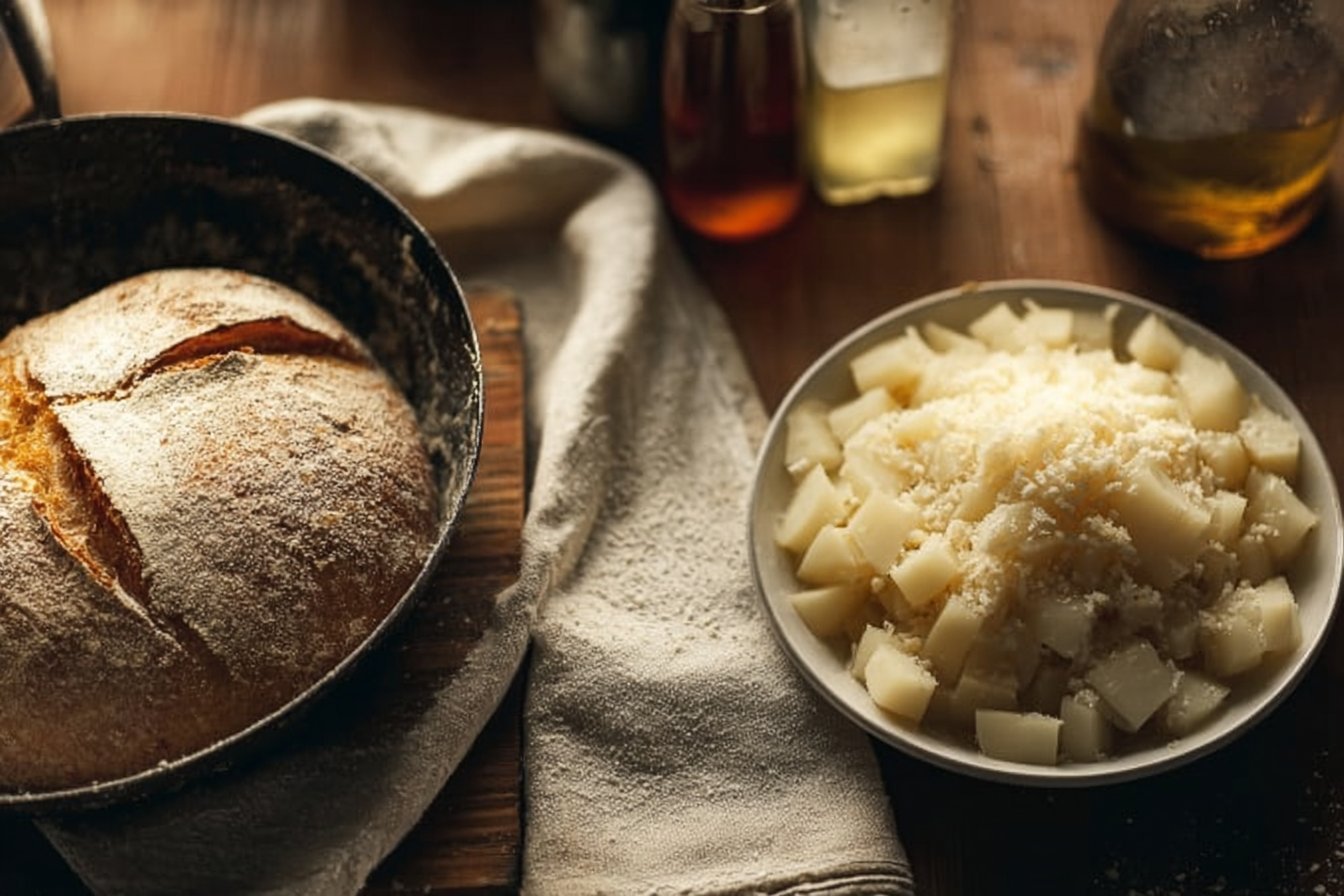
I remember the first loaf I baked that truly tasted like home: a warm, sunbrowned boule of Sourdough Potato Bread that filled my narrow kitchen with an earthy, buttery scent. When I tore that crust, steam rose and the soft crumb smelled faintly of potatoes and fermented tang, and suddenly the ragù I was simmering for dinner seemed to have found its perfect partner. I learned to make this bread over a long autumn when I wanted something both rustic and tender — a loaf that could cradle savory mushrooms or simply slathered butter, reminding me of the slow Sundays when my nonna taught me to knead with patience and joy.
Flavor and Popularity
The Unique Flavor Profile of Sourdough Potato Bread
Sourdough Potato Bread balances two beautiful worlds: the bright, tangy complexity of a wild-yeast starter and the gentle, rich silkiness that mashed potatoes lend to the crumb. The potato adds moisture and a soft, almost custard-like texture, while sourdough fermentation produces those subtle lactic notes and a chewy crust. Together, they create a loaf that tastes both familiar and slightly adventurous — earthy yet bright, with a lingering umami depth when you pair it with roasted garlic or sautéed mushrooms.
Moreover, the crust caramelizes into a buttery shell because the potato sugars encourage a better browning. As a result, the loaf appeals to many palates: children love the pillowy crumb, while seasoned bakers appreciate its fermentation-driven complexity.
Why This Recipe Is a Family Favorite and Crowd-Pleaser
Families adore Sourdough Potato Bread because it keeps well and always feels like comfort. You can slice it for sandwiches, toast it for breakfast, or serve thick wedges with a bowl of soup. In my osteria, I often slice a warm loaf and let guests tear it with their hands; within minutes, plates empty and conversations soften. Furthermore, this bread forgives small mistakes in shaping and proofing, so it suits home bakers who prefer soulful, hands-on baking rather than perfectionism.
Because it pairs beautifully with both delicate flavors (herbed butter, soft cheeses) and bolder notes (braised meats, umami mushrooms), Sourdough Potato Bread remains a reliable center for many meals.
Ingredients and Preparation
Essential Ingredients and Possible Substitutions
- Active sourdough starter (fed and bubbly) — this gives the loaf its character. If your starter sits in the fridge, feed it and wait until it doubles.
- All-purpose or bread flour — bread flour gives more chew, yet all-purpose works well and keeps the crumb tender.
- Mashed potatoes (starchy, ideally russet or Yukon Gold) — these add moisture and softness. You can use leftover mashed potatoes or quickly boil and mash about 200g.
- Water — adjust for hydration and the feel of the dough.
- Salt — use fine sea salt for even distribution.
- Olive oil or melted butter — optional, for extra richness and a softer crust.
- Optional: herbs (rosemary, thyme), minced roasted garlic, sautéed mushrooms — these add savory, aromatic layers.
Substitutions and tips:
- Use instant mashed potato flakes in a pinch; rehydrate them first to avoid dryness.
- For a gluten-free adaptation, use a commercially blended gluten-free flour and increase hydration, but note that sourdough behavior changes significantly.
- If you want a richer loaf, replace up to 20% of the water with milk, which creates a softer crumb and deeper color.
For a quick note on nutrition and staples: If you ever wonder how potatoes compare nutritionally with rice for side dishes, see this handy comparison about mashed potatoes and rice for context: mashed potatoes vs rice. This helps when you plan meals that include Sourdough Potato Bread as a complementary side.
Step-by-Step Recipe Instructions with Tips
- Prepare the potatoes. Boil or roast two medium russets until very tender, then mash without lumps. Cool to lukewarm.
- Feed your starter. Refresh your sourdough starter 4–8 hours before mixing so it becomes lively and active.
- Mix the dough. In a large bowl, combine the mashed potatoes, 350–400g lukewarm water, and 200g fed starter. Whisk lightly to integrate. Then add 450–500g flour and 10g salt. Mix until a shaggy dough forms.
- Autolyse and rest. Let the dough rest for 30–45 minutes; this hydrates the flour and starts gluten formation.
- Build strength with folds. Perform a series of stretch-and-folds every 30 minutes for two hours: reach under the dough, lift and fold over. Repeat 4–6 times. The dough will smooth and gain tension.
- Bulk ferment. Allow the dough to rise at room temperature until it increases by about 30–50% and shows bubbles. Timing varies with starter strength and room temperature; expect 3–6 hours.
- Shape the loaf. Turn the dough onto a floured surface, pre-shape into a round and rest 20 minutes. Then shape tightly into a boule or bâtard with a seam on the bottom.
- Proof. Place the shaped loaf in a floured banneton or bowl lined with a towel and dusted with flour. Proof in the refrigerator overnight for 8–12 hours for complex flavor, or proof at room temperature for 2–4 hours if you need it sooner.
- Preheat your oven and vessel. Preheat to 460°F (240°C) with a Dutch oven or baking stone inside for at least 45 minutes.
- Score and bake. Turn the loaf onto parchment, score with a sharp blade, then bake covered for 20 minutes. Remove the lid and bake another 20–30 minutes until the crust turns deep golden and sounds hollow when tapped.
- Cool. Let the bread cool completely on a rack before slicing; cooling completes the crumb structure and prevents gumminess.
Tip: For more savory notes, fold in sautéed mushrooms or minced roasted garlic during the final folds. Also, brush the loaf with melted butter right out of the oven for a tender, glossy crust.
Cooking Techniques and Tips
How to Cook Sourdough Potato Bread Perfectly
Bake with steam for the first stage. Steam keeps the crust supple so the loaf can expand fully; a Dutch oven mimics a professional steamer. Additionally, control your fermentation: if the dough over-proofs, it loses oven spring and becomes dense; under-proofed loaves will tear and remain tight inside. Therefore, trust the feel and look of the dough more than the clock.
Use tactile cues: the dough should feel airy and slightly jiggly after bulk ferment. When shaping, create surface tension to help the loaf bloom. Score decisively and with a single fluid motion to give the oven a place for the bread to open.
Finally, cool thoroughly. Although you’ll want to slice into the warm crumb, patience improves texture. When you wait, the crumb sets, and flavors settle, delivering better taste.
Common Mistakes to Avoid
- Under-hydrating. Potato adds moisture, but you must still use enough water for gluten development. If the dough feels dry, add water a tablespoon at a time.
- Overworking. Stretch-and-folds build strength gradually; avoid vigorous kneading that damages the dough’s gas-retaining structure.
- Baking too hot or too cool. Too hot burns the crust before the crumb cooks; too cool leads to a pale, dense loaf. Preheat thoroughly and use an oven thermometer.
- Skipping the starter feeding. A sluggish starter gives weak fermentation and poor rise. Feed it in advance and ensure it’s active.
- Slicing too soon. The loaf needs to cool; otherwise, the interior becomes gummy. Wait at least one hour for small loaves, ideally longer for large boules.
Health Benefits and Serving Suggestions
Nutritional Value of Sourdough Potato Bread
Sourdough fermentation improves nutrient availability and digestibility, while potatoes contribute resistant starch and vitamins, particularly when cooled. Together, they form a bread that delivers slow-release energy, some B vitamins from the starter, and minerals from the potato. Although bread remains a carbohydrate-rich food, sourdough fermentation often reduces phytic acid and renders minerals more bioavailable, and the potato enriches the crumb with moisture and satiety.
Moreover, using whole-grain flours or adding seeds increases fiber and micronutrients, converting this loaf into a more balanced side. Remember portion control, and pair the bread with protein or vegetables for a complete meal.
Best Ways to Serve and Pair This Dish
- With butter and flaky sea salt: keep it simple and the loaf will shine.
- Topped with sautéed mushrooms and thyme: the earthy umami of mushrooms complements the bread’s tang.
- As a sandwich base: use roasted vegetables, slow-cooked meats, or a classic caprese for a pleasing contrast.
- Alongside soups and stews: the tender crumb soaks up broths beautifully.
- Toasted with garlic and herbs in a skillet for bruschetta-style bites.
For richer pairings, think of creamy cheeses, herbaceous chimichurri, or a bright tomato jam. Because the loaf balances tang and softness, it works as the perfect companion to both delicate and robust flavors.
FAQ Section
What type of mushrooms are best for Sourdough Potato Bread?
Cremini or baby bella mushrooms bring a deep, earthy flavor that matches the bread’s tang and potato richness; however, for more umami intensity, use shiitake or porcini. Sauté mushrooms in butter or olive oil with a pinch of salt and thyme, then fold them gently into the dough during the final folds or serve them atop toasted slices for a luxurious bite.
Can I use dried garlic instead of fresh?
Yes, you can use dried garlic powder or flakes, yet fresh roasted garlic delivers a rounder, sweeter flavor and more moisture. If you use dried garlic, hydrate it briefly or add a touch more oil so it integrates evenly without drying the crumb.
How do I store leftover Sourdough Potato Bread?
Store the loaf in a breathable cotton bread bag or wrapped in a clean tea towel at room temperature for up to three days. For longer storage, place sliced pieces in a sealed container in the refrigerator for up to a week, but note that refrigeration can dry bread; toast slices to refresh their texture.
Can I freeze Sourdough Potato Bread?
Absolutely. Slice the loaf first, then wrap portions tightly in plastic and place them in a freezer-safe bag. Freeze up to three months. When ready, thaw slices at room temperature or toast them straight from frozen for quick breakfasts or sandwiches.
Conclusion
If you’re like me, you bake because the kitchen remembers the people you love and the stories you want to tell. There’s something comforting about a warm Sourdough Potato Bread pulled from the oven — its scent stitches together Sunday afternoons and small, ordinary celebrations. Trust me, you’ll want to make this again and again: it gives you forgiving dough to learn on, a tender crumb to share, and endless ways to dress it up or keep it simply buttery. So feed your starter, mash a few potatoes, and let the process slow you down; you’ll find that baking this loaf reconnects you to the small, delicious rituals that matter.
Print
Best Sourdough Potato Bread
- Total Time: 90 minutes
- Yield: 1 loaf 1x
- Diet: Vegetarian
Description
A comforting and rustic Sourdough Potato Bread recipe that pairs beautifully with savory dishes and offers a tender crumb with rich potato flavor.
Ingredients
- 200g active sourdough starter (fed and bubbly)
- 450–500g all-purpose or bread flour
- 200g mashed potatoes (russet or Yukon Gold)
- 350–400g lukewarm water
- 10g fine sea salt
- Olive oil or melted butter (optional)
- Optional herbs (rosemary, thyme), minced roasted garlic, sautéed mushrooms
Instructions
- Prepare the potatoes: Boil or roast two medium russets until very tender, then mash without lumps. Cool to lukewarm.
- Feed your starter: Refresh your sourdough starter 4–8 hours before mixing so it becomes lively and active.
- Mix the dough: In a large bowl, combine the mashed potatoes, 350–400g lukewarm water, and 200g fed starter. Whisk lightly to integrate. Then add 450–500g flour and 10g salt. Mix until a shaggy dough forms.
- Autolyse and rest: Let the dough rest for 30–45 minutes.
- Build strength with folds: Perform a series of stretch-and-folds every 30 minutes for two hours.
- Bulk ferment: Allow the dough to rise at room temperature until it increases by about 30–50%, approximately 3–6 hours.
- Shape the loaf: Turn the dough onto a floured surface, pre-shape into a round, and rest for 20 minutes. Then shape tightly into a boule.
- Proof: Place the shaped loaf in a floured banneton or bowl and proof in the refrigerator overnight for 8–12 hours.
- Preheat your oven: Preheat to 460°F (240°C) with a Dutch oven or baking stone inside for at least 45 minutes.
- Score and bake: Turn the loaf onto parchment, score with a sharp blade, then bake covered for 20 minutes. Remove the lid and bake another 20–30 minutes until deep golden.
- Cool: Let the bread cool completely on a rack before slicing.
Notes
For added flavor, fold in sautéed mushrooms or minced roasted garlic during the final folds. Brush the loaf with melted butter right out of the oven for a tender crust.
- Prep Time: 30 minutes
- Cook Time: 60 minutes
- Category: Bread
- Method: Baking
- Cuisine: Italian
Nutrition
- Serving Size: 1 slice
- Calories: 200
- Sugar: 1g
- Sodium: 300mg
- Fat: 5g
- Saturated Fat: 1g
- Unsaturated Fat: 3g
- Trans Fat: 0g
- Carbohydrates: 35g
- Fiber: 2g
- Protein: 7g
- Cholesterol: 0mg
Keywords: sourdough, potato bread, comfort food, baking, artisan bread